
MENU
Where I Find Hope:
A Tour of My T-Shirts
Part 1 of a Weekly October Series on Hope
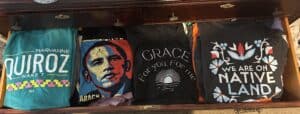
Gritty Hope – Hope That Gets Back Up
The world feels unbearably heavy right now. The weight of violence, injustice, and division can make hope feel far away, even naïve.
But I believe the kind of hope we need isn’t naïve at all.
As Bishop Kym Lucas of the Episcopal Church in Colorado says:
“Hope has dirt on her face, blood on her knuckles and the grit of cobblestone in her hair. And she just spat out a tooth as she got back up and went for another go.”
That’s the kind of hope I want to write about. Persistent. Relentless. Bruised, but still rising.
Recently, at a staff meeting, we were discussing October’s theme: hope. How do we keep going? How do we get out from under the weight of everything? At the end, I was tasked with writing this blog. Which was fitting—because recently, I went looking for hope. Literally.
I went digging into my T-shirt drawer to find the Hope T-shirt. The one made famous in the 2008 presidential race.
Buried under layers of too many tees, I found it and pulled it on. Immediately, I felt lighter. Connected. To a man. To a movement. To a moment in time when hope felt both radical and possible.
That shirt got me thinking: What does hope really mean to me? How do these T-shirts I’ve collected over the years carry stories of hope, resilience, and connection?
Some of my stories are political–shaped by the leaders, movements, and moments that have given me strength. AND hope isn’t political or partisan. What I want to convey is that we need to keep looking for hope, and keep finding ways to hold onto it.
Read on to see where I found it—and how a few well-worn T-shirts reminded me what hope really means. Throughout October, I’ll be sharing a few of them—because hope grows stronger when we share it together.
Hope
The red, white, an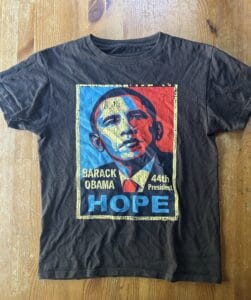 d blue Shepard Fairey design of Barack Obama has cracked with age. The shirt itself is a little small, handed down to me from one of my kids. But I keep it as a reminder.
A reminder of the time when the U.S. elected its first Black president in a deeply polarized environment. A reminder of the racism and vitriol he endured, and of the perseverance with which he kept coming back, head held high.
At the time, I was pregnant with my fourth child and learning I’d be bringing another son into the world. Watching the hate directed at Obama reminded me that raising three white boys meant helping them grow up with awareness and responsibility. That realization drew me deeper into racial justice work that continues to shape me.
This shirt gives me hope that good, honest, respectable leaders—flawed though they may be—still exist. And that in community, we can face hardship together.
👉 Reflection for Gritty Hope: What movements or leaders remind you that hope can get back up, even when it’s bruised?
Vote No
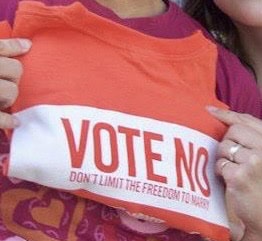
The bright orange Vote No T-shirt grabs my attention next. It takes me back to 2012, when Minnesota was facing a constitutional amendment to limit marriage to between a man and a woman. At the time, it was a real and painful threat—that people might not be free to marry who they loved.
I wore this shirt proudly after running my first race—the Big Gay Race. Here’s what I posted that day:
“Hey, Minnesota! VOTE NO!
Inspired by the love I’ve witnessed between GLBT friends, church members and family, I ran my first race today—the BIG GAY RACE!
I’d love to have an honest, respectful conversation with anybody considering voting in favor of this discriminatory amendment.
Don’t limit love!”
That movement gave me hope—not just for policy change, but for the way thousands of Minnesotans came together to defend love, dignity, and equality. And it worked. Through years of tenacious work, the amendment was defeated.
This shirt reminds me that hope isn’t passive—it’s active. It runs, it speaks out, it shows up with love and courage.
👉 Reflection: Where have you seen hope win out through persistence and community action?
Hope gets back up, again and again. Next week, I’ll share how I find that same persistence right here at home—in neighbors and movements that keep hope alive in our communities.
Published October 4, 2025
